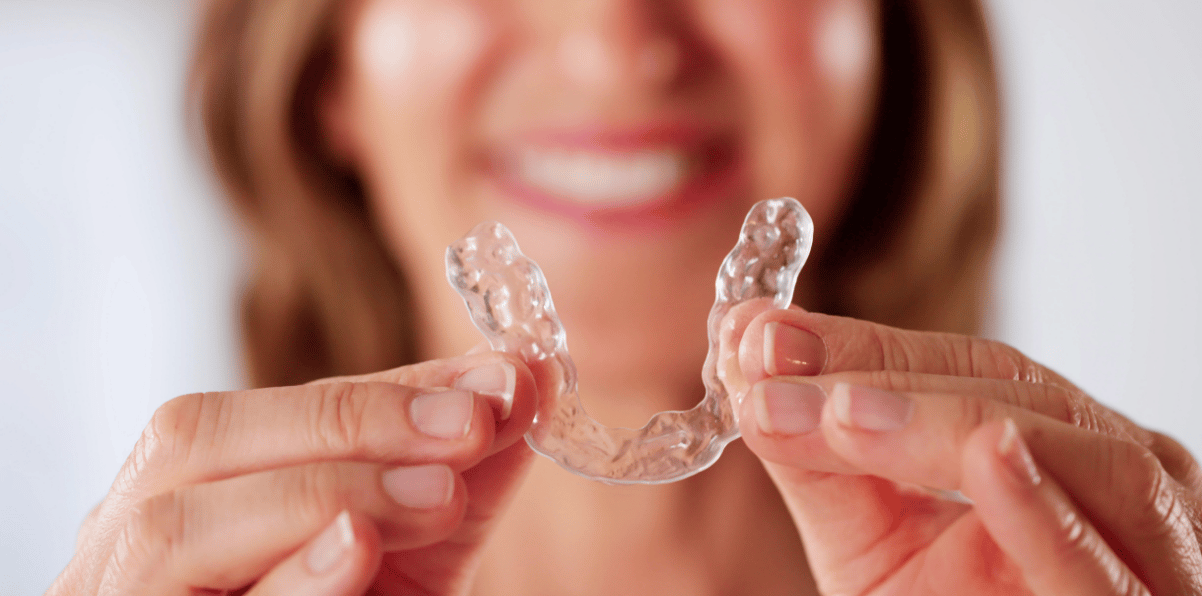
Do you wake up with jaw pain or headaches that just won’t quit? You might be grinding your teeth at night without even knowing it! Over time, this can cause real discomfort – from tooth wear to chronic pain in your head, jaw, and even your back. We’re here to help with custom night guards and, more importantly, get to the root of why it’s happening, whether it’s stress, lifestyle, or other factors.
Breathe easy, sleep better
Are you constantly tired despite a full night’s sleep? Snoring keeping your partner awake? You might be surprised to learn that your dentist can help! Sleep apnoea and airway issues are more connected to oral health than most people realise. We are experienced in identifying airway issues and providing effective dental solutions, such as custom oral appliances that keep your airway open while you sleep. These comfortable, non-invasive devices can be life-changing alternatives or complements to CPAP machines. Better sleep means better health, more energy, and a happier you – let’s help you breathe easier and wake up feeling truly refreshed!
A joined-up approach
When treating tooth grinding, we take a holistic approach that takes your lifestyle as a whole into account. This means:
We will never simply send you home with a splint, and with this joined-up approach, we have helped improve the quality of life of many patients.
Muscular pain is the most common complaint, which is a result of muscle imbalance or overuse due to bruxism. Bruxism is excessive clenching or grinding of the teeth that is not part of the normal chewing or talking movements of the jaw. Most patients have no idea they clench or grind as much as they do, especially if it happens overnight while they sleep.
Bruxism overworks the facial musculature, which leads to pain as the muscles fatigue in the TMJ joint (the joint connecting the lower jaw to the skull). Wear and fractures of teeth and dental restorations become common. Stress and emotional tension are also closely linked to bruxism.
Book a consultation

Teeth grinding is mainly caused by:
Once we have diagnosed the reason why you grind (or clench) your teeth, we can support you by:
The TMJ (temporomandibular joint, aka the jaw joint) is a simple ball-and-socket joint that connects the lower jawbone to the skull. Teeth grinding can involuntarily put intense pressure on the TMJ, leading to pain. With the jaw inflamed, the pain can also radiate to the skull, neck and top of the spine.
If you experience clicking when you open your mouth, dizziness and pain during chewing, it could be due to TMJ inflammation. In the vast majority of cases, tooth grinding is the cause.




“I just finished my Invisalign treatment with Arti, and I must say she is such a cool dentist. Not only does she…”
“Went for a check-up, hoping to get a wisdom tooth pulled out. And I got it taken out in the most painless…”
“Dr Arti Shah is a fantastic dentist who helped me restore my confidence in my smile with Invisalign. Her passion, patience and…”
“Dr Arti was really attentive, truly cares about her patients and is really passionate about her craft. My teeth didn’t look how…”
“I have recently completed my Invisalign with Dr Arti Shah, and she was fantastic from the start. So pleasant to deal with,…”
“I can wholeheartedly recommend Arti Shah and her team. Having just finished my treatment after being in her care for a year,…”
“I just finished my Invisalign treatment with Arti, and I must say she is such a cool dentist. Not only does she…”
“Went for a check-up, hoping to get a wisdom tooth pulled out. And I got it taken out in the most painless…”
“Dr Arti Shah is a fantastic dentist who helped me restore my confidence in my smile with Invisalign. Her passion, patience and…”
“Dr Arti was really attentive, truly cares about her patients and is really passionate about her craft. My teeth didn’t look how…”
“I have recently completed my Invisalign with Dr Arti Shah, and she was fantastic from the start. So pleasant to deal with,…”
“I can wholeheartedly recommend Arti Shah and her team. Having just finished my treatment after being in her care for a year,…”

 Instagram®
Stay connected and discover more! Follow us on Instagram for the latest updates, exclusive content, and daily inspiration.